Recognizing Signs of Mental Health Issues
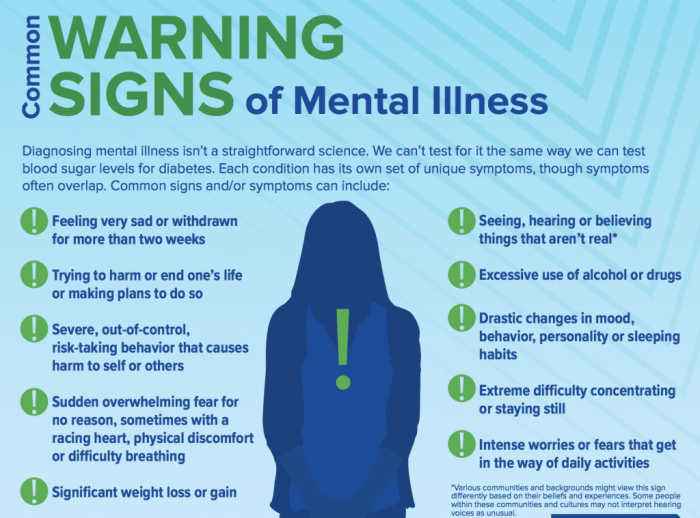
Recognizing signs of mental health issues is crucial in order to provide timely support and intervention for those in need. It is important to be aware of common signs and behaviors that may indicate underlying mental health problems.
Common Signs of Mental Health Issues
- Changes in mood or behavior that are extreme or persistent.
- Withdrawal from social activities and relationships.
- Difficulty concentrating or making decisions.
- Changes in sleeping or eating patterns.
- Feelings of hopelessness, worthlessness, or guilt.
Examples of Behaviors Indicating Mental Health Problems
- Increased irritability or anger without apparent cause.
- Engaging in risky behaviors or self-harm.
- Experiencing unexplained physical ailments, such as headaches or stomachaches.
- Intense fear or worry that disrupts daily activities.
Differentiating Between Normal Mood Changes and Potential Mental Health Issues
- Normal mood changes are usually temporary and triggered by specific events, while mental health issues are persistent and interfere with daily functioning.
- It is important to pay attention to the duration and intensity of symptoms, as well as how they impact the individual’s life.
- Seeking professional help and support can aid in accurately identifying and addressing mental health concerns.
Mental Wellness
Maintaining mental wellness is crucial for overall health and well-being. It involves taking care of your emotional, psychological, and social well-being to cope with the stresses of daily life, work effectively, and realize your full potential.
Strategies for Promoting Mental Wellness
- Practice self-care routines: Engage in activities that bring you joy and relaxation, such as exercise, meditation, or hobbies.
- Build strong social connections: Stay connected with family and friends, seek support when needed, and nurture positive relationships.
- Manage stress effectively: Develop healthy coping mechanisms, set boundaries, and prioritize tasks to reduce stress levels.
- Seek professional help: Don’t hesitate to reach out to mental health professionals for guidance and support when facing challenges.
Impact of Mental Wellness on Physical Health
Maintaining good mental health not only benefits your emotional well-being but also has a positive impact on your physical health. Research has shown that individuals with better mental wellness are more likely to engage in healthy behaviors, such as regular exercise, balanced diet, and adequate sleep. This, in turn, lowers the risk of various physical health conditions like heart disease, obesity, and diabetes. Additionally, mental wellness contributes to a stronger immune system, faster recovery from illnesses, and overall longevity.
Physical Fitness
Regular physical activity plays a crucial role in maintaining good mental health. The connection between physical fitness and mental well-being is well-established, as exercise has been shown to release endorphins, which are chemicals in the brain that act as natural painkillers and mood elevators.
Examples of Physical Exercises for Mental Well-Being
- Cardiovascular exercises like running, cycling, or swimming can help reduce symptoms of anxiety and depression.
- Yoga and Pilates are excellent for improving mindfulness and reducing stress levels.
- Strength training exercises can boost self-esteem and improve overall mood.
- Dancing or other forms of aerobic exercise can enhance cognitive function and memory.
Regular Physical Activity in Managing Stress and Anxiety
Regular physical activity can be an effective way to manage stress and anxiety. Exercise helps to reduce the levels of cortisol, the stress hormone, in the body, leading to a decrease in feelings of tension and anxiety. Additionally, engaging in physical activity promotes better sleep, which is essential for mental well-being. By incorporating a consistent exercise routine into your daily life, you can significantly improve your mental health and overall quality of life.
Healthy Eating
Eating a balanced diet is not only important for physical health but also plays a crucial role in supporting good mental health. The food we consume can significantly impact our mood, energy levels, and overall well-being.
Nutrition and Mental Health
Nutrition and mental health are closely linked, as certain nutrients play a key role in brain function and neurotransmitter production. For example, omega-3 fatty acids found in fish, nuts, and seeds are essential for brain health and can help reduce symptoms of depression and anxiety. Additionally, foods rich in antioxidants, such as fruits and vegetables, can protect the brain from oxidative stress and inflammation, which are linked to mental health disorders.
Foods for Good Mental Health, How to recognize signs of mental health issues
- Eat plenty of fruits and vegetables to provide essential vitamins, minerals, and antioxidants for brain health.
- Incorporate whole grains like brown rice, quinoa, and oats for sustained energy levels and stable mood.
- Include lean proteins such as poultry, fish, beans, and legumes to support neurotransmitter function and mood regulation.
- Opt for healthy fats like avocados, olive oil, and nuts to nourish the brain and reduce inflammation.
- Stay hydrated by drinking enough water throughout the day to maintain cognitive function and mood stability.
Role of a Balanced Diet
A balanced diet that includes a variety of nutrient-dense foods is essential for promoting overall well-being. By providing the necessary nutrients for brain function and mental health, a balanced diet can help reduce the risk of developing mood disorders, improve cognitive function, and enhance emotional well-being. Making healthy food choices is a valuable investment in both physical and mental health.
Preventive Care
How to recognize signs of mental health issues – Preventive care plays a crucial role in maintaining good mental health by identifying and addressing potential issues before they escalate. By taking proactive steps, individuals can better manage their mental well-being and overall quality of life.
Examples of Preventive Measures
- Regular exercise: Engaging in physical activities like walking, jogging, or yoga can help reduce stress and improve mood.
- Maintaining a healthy diet: Eating nutritious foods rich in vitamins and minerals can support brain function and emotional well-being.
- Practicing mindfulness and relaxation techniques: Techniques such as meditation, deep breathing, and journaling can help manage anxiety and promote mental clarity.
- Seeking social support: Building strong relationships with friends and family members can provide a sense of belonging and emotional support during challenging times.
Importance of Early Intervention
Early intervention is key in preventing the escalation of mental health problems. By recognizing early warning signs and seeking help from mental health professionals, individuals can address issues before they become more severe. This can lead to better treatment outcomes and improved overall mental well-being.
Holistic Wellness
Holistic wellness is an approach that considers the whole person – mind, body, and spirit – in the quest for optimal health and wellness. It emphasizes the importance of balance and harmony among all aspects of an individual’s life to achieve overall well-being, including mental health.
Holistic Approaches to Improving Mental Well-being
- Practicing mindfulness and meditation to reduce stress and promote mental clarity.
- Incorporating regular physical activity into daily routines to boost mood and reduce symptoms of anxiety and depression.
- Eating a balanced diet rich in nutrients to support brain function and overall mental health.
- Engaging in creative activities like art, music, or writing to express emotions and promote self-discovery.
- Connecting with nature through outdoor activities to improve mood and reduce feelings of isolation.
Benefits of Integrating Holistic Practices into Daily Routines
- Improves overall well-being by addressing mental, physical, and emotional needs simultaneously.
- Promotes a sense of balance and harmony in life, leading to reduced stress and improved mental clarity.
- Enhances self-awareness and personal growth through practices like mindfulness and self-reflection.
- Strengthens the mind-body connection, leading to better resilience in facing life’s challenges.
- Supports long-term mental health stability by adopting sustainable lifestyle habits that prioritize holistic wellness.
Chronic Diseases
Chronic diseases can have a significant impact on mental health, creating a complex relationship between physical and emotional well-being. When dealing with chronic conditions, individuals may experience increased stress, anxiety, and depression, which can further exacerbate their physical symptoms.
Examples of Impact on Mental Well-being
- Chronic pain from conditions like arthritis or fibromyalgia can lead to feelings of helplessness and frustration, impacting mood and overall mental health.
- Managing a chronic illness such as diabetes or heart disease may require strict lifestyle changes, leading to feelings of isolation or anxiety.
- Long-term conditions like cancer can cause emotional distress, fear of recurrence, and changes in self-image, affecting mental well-being.
Strategies for Managing Mental Health with Chronic Conditions
- Seeking professional help from therapists or counselors who understand the challenges of living with a chronic illness can provide valuable support.
- Engaging in stress-reducing activities such as mindfulness meditation, yoga, or deep breathing exercises can help manage anxiety and improve mental well-being.
- Building a strong support network of friends, family, or support groups can offer emotional support and encouragement during difficult times.
- Practicing self-care through healthy eating, regular exercise, and sufficient sleep can contribute to overall well-being and better mental health outcomes.
Immunity Boosters: How To Recognize Signs Of Mental Health Issues
Having a strong immune system is not only important for physical health but also plays a significant role in mental well-being. The connection between immunity and mental health is intertwined, as a healthy immune system can help regulate inflammation in the body, which has been linked to mental health conditions such as depression and anxiety.
Immunity Boosters for Mental Well-being
- Eat a balanced diet rich in fruits, vegetables, lean proteins, and whole grains to support overall immunity and mental health.
- Include foods high in antioxidants like berries, nuts, and leafy greens to help reduce inflammation in the body and promote brain health.
- Get regular exercise to boost circulation and immune function, which can positively impact mood and cognitive function.
- Stay hydrated by drinking plenty of water throughout the day to support the body’s natural defense mechanisms and cognitive function.
- Practice stress-reducing activities such as yoga, meditation, or deep breathing exercises to lower cortisol levels and enhance immune response.
Question Bank
What are some common signs of mental health issues?
Common signs include changes in mood, behavior, and thought patterns, as well as withdrawal from social activities.
How can I differentiate between normal mood changes and potential mental health issues?
It’s important to look for persistent patterns of behavior that significantly impact daily functioning. Consulting with a mental health professional can provide clarity.
Why is preventive care important in maintaining mental health?
Preventive measures can help identify issues early on, making it easier to address and prevent the escalation of mental health problems.
What is holistic wellness and how does it impact mental health?
Holistic wellness focuses on the integration of mind, body, and spirit, promoting overall well-being that can positively affect mental health.
How does immunity relate to mental health?
A strong immune system can support better mental health by reducing stress and promoting overall well-being.