Understanding Food Labels
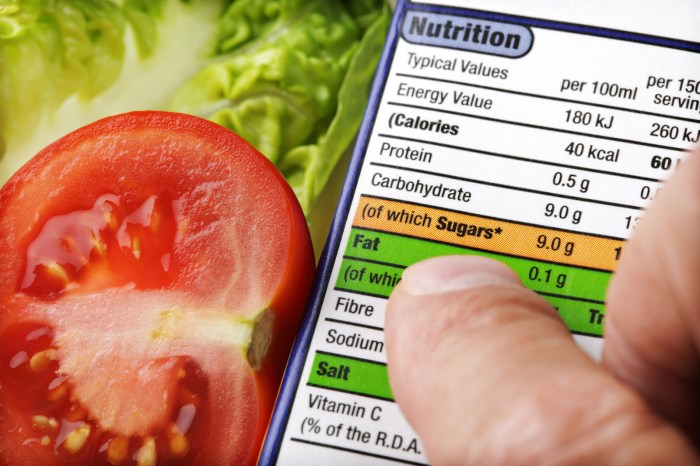
How to read food labels for healthier choices – Reading food labels is essential for making healthier choices as it provides vital information about the nutritional content of the food we consume.
Key Information on Food Labels
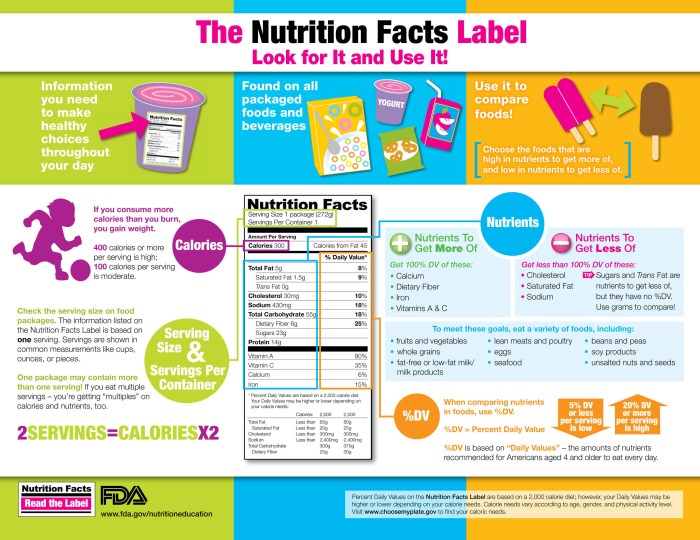
- Serving Size: The serving size indicates the amount of food the nutrition facts are based on. It helps in understanding portion control.
- Calories: The number of calories per serving gives an idea of how much energy the food provides.
- Nutrients: Food labels list important nutrients such as fats, carbohydrates, proteins, vitamins, and minerals present in the product.
Interpreting Percentages like Daily Value (%DV)
Percentage Daily Value (%DV) on food labels shows how much of a specific nutrient one serving of food contributes to your daily diet based on a 2,000-calorie diet.
For example, if a food has 10% DV of sodium, it means that one serving provides 10% of the sodium you should consume in a day.
Ingredients List Analysis
When it comes to making healthier food choices, understanding the ingredients list is crucial. It provides valuable information about what you are putting into your body and can help you avoid hidden sugars, unhealthy fats, and additives.
Recognizing Hidden Sugars, Unhealthy Fats, and Additives
Many processed foods contain hidden sugars under various names such as high fructose corn syrup, dextrose, or sucrose. Look out for these ingredients and opt for products with lower sugar content. Similarly, unhealthy fats like trans fats or saturated fats can have detrimental effects on your health. Choose products with healthier fats like monounsaturated or polyunsaturated fats instead. Additionally, watch out for additives like artificial colors, flavors, and preservatives that can have negative impacts on your well-being.
Common Misleading Terms on Labels
- Natural: The term “natural” on food labels can be misleading as it does not necessarily mean that the product is healthy or free from artificial ingredients. Always check the actual ingredients list to determine the true nature of the product.
- Low-Fat: Foods labeled as “low-fat” may still contain high amounts of sugar or unhealthy additives to compensate for the lack of fat. Be sure to check the overall nutritional profile of the product before making a decision based solely on this claim.
- Whole Grain: While products labeled as “whole grain” may seem healthier, some may still contain refined grains or added sugars. Look for products with whole grains listed as the first ingredient to ensure you are getting the full nutritional benefits.
Nutrient Breakdown: How To Read Food Labels For Healthier Choices
When looking at food labels for healthier choices, it’s important to pay attention to the nutrient breakdown. This includes essential nutrients like fiber, vitamins, and minerals that are crucial for overall health and well-being.
Comparing different products based on their nutrient content per serving can help you make more informed decisions about what you’re putting into your body. Understanding how to balance nutrients like carbohydrates, proteins, and fats is key to maintaining a healthy diet.
Essential Nutrients to Look For
When reading food labels, keep an eye out for these essential nutrients:
- Fiber: Important for digestive health and helps you feel full longer.
- Vitamins: Look for sources of Vitamin A, C, D, E, and K, as well as B vitamins like B6 and B12.
- Minerals: Check for calcium, iron, potassium, and magnesium content.
Comparing Nutrient Content
When comparing different products, consider the nutrient content per serving to make the best choice. For example, opt for products with higher fiber and vitamin content and lower added sugars and sodium.
Balancing Nutrients for a Healthier Diet
Balance is key when it comes to nutrients in your diet. Aim to include a variety of foods that provide a good mix of carbohydrates, proteins, and fats. Remember that moderation and portion control are also important factors in maintaining a balanced diet.
Allergen Awareness
Food labels play a crucial role in helping individuals with food sensitivities or allergies navigate their choices safely. Understanding how to identify allergens, avoid cross-contamination risks, and interpret precautionary labels can make a significant difference in maintaining a healthy diet.
Identifying Allergens
- Check the ingredient list for common allergens such as peanuts, tree nuts, milk, eggs, soy, wheat, fish, and shellfish.
- Look for allergen warnings placed in bold or highlighted on the packaging to alert consumers of potential allergens present in the product.
- Be aware of hidden allergens like gluten, which can be present in additives or flavorings under different names.
Avoiding Cross-Contamination
- Choose products that are certified as allergen-free or produced in dedicated facilities to reduce the risk of cross-contamination.
- Read labels carefully for information on shared equipment or facilities with allergens to make informed decisions.
- Opt for single-ingredient foods or whole foods to minimize the chances of exposure to allergens during processing.
Precautionary Allergen Labels
- Pay attention to precautionary allergen labels like “may contain” or “processed in a facility that also handles” to assess potential cross-contamination risks.
- Consider the severity of your allergy and consult with a healthcare provider to determine the level of risk associated with consuming products with precautionary labels.
- When in doubt, reach out to the manufacturer for clarification on the presence of allergens and the measures taken to prevent cross-contamination.
Health Claims Decoding
Understanding the health claims on food labels is crucial for making informed choices about the products we consume. Let’s delve into the common health claims, regulations, and how to distinguish between genuine claims and marketing strategies.
Common Health Claims
Food labels often feature various health claims designed to attract consumers. Here are some common ones:
- “Low Sodium”: Indicates that the product contains a reduced amount of sodium, which can be beneficial for those monitoring their salt intake.
- “Organic”: Signifies that the product has been produced without synthetic pesticides, fertilizers, or genetically modified organisms.
- “Heart-Healthy”: Implies that the food is beneficial for heart health, usually due to its low saturated fat content.
Regulations on Health Claims
Health claims on food packaging are regulated by authorities to prevent misleading information. The regulations ensure that claims are accurate and backed by scientific evidence.
It’s essential for companies to meet specific criteria before including health claims on their products.
Differentiating Genuine Claims from Marketing Tactics
With the rise of marketing tactics in the food industry, it can be challenging to separate genuine health claims from mere advertising strategies. Here’s how you can differentiate:
- Look for specific details: Genuine health claims provide concrete information about the benefits of the product.
- Check for certifications: Products with legitimate health claims often carry certifications from recognized organizations.
- Be wary of exaggerated claims: If a health claim sounds too good to be true, it might be a marketing tactic rather than a genuine benefit.
Portion Control and Serving Sizes
Understanding portion sizes is crucial for managing calorie intake and maintaining a healthy diet. By being mindful of how much you eat, you can prevent overeating and ensure you are consuming the right amount of nutrients your body needs.
Importance of Portion Control
It is essential to adjust portion sizes based on your individual dietary needs. Factors such as age, gender, activity level, and weight goals influence how much you should be eating. Consulting with a healthcare professional or a nutritionist can help you determine the appropriate portion sizes for your specific needs.
Tips for Portion Control
- Use your hand as a guide: Your palm can represent a protein portion, your fist can indicate a carbohydrate serving, your thumb can measure fats/oils, and your cupped hand can estimate snacks.
- Divide your plate: Fill half of your plate with vegetables, one-quarter with lean protein, and one-quarter with whole grains.
- Avoid eating straight from the container: Instead, portion out your food on a plate to prevent mindless overeating.
- Read food labels for serving sizes: While visually estimating portions is helpful, it’s also important to check the serving sizes on labels to ensure you are consuming the right amount.
Label Reading for Specific Health Goals
When it comes to reading food labels for specific health goals, it’s essential to pay attention to certain key details that can help you make informed choices. Whether you’re aiming for weight loss, muscle gain, improved energy levels, or have specific dietary requirements, understanding how to interpret food labels can be a game-changer in achieving your health goals.
Weight Loss
- Focus on the serving size and total calories per serving to manage your calorie intake effectively.
- Look for foods with lower amounts of added sugars, saturated fats, and sodium to support weight loss efforts.
- Pay attention to the fiber content as high-fiber foods can help you feel full for longer periods.
Muscle Gain
- Check the protein content per serving as protein is essential for muscle growth and repair.
- Opt for foods with healthy fats like omega-3 fatty acids to support overall muscle health.
- Aim for carbohydrate-rich foods to fuel your workouts and replenish glycogen stores post-exercise.
Improved Energy Levels
- Look for foods high in complex carbohydrates to provide sustained energy throughout the day.
- Choose foods with vitamins and minerals like B vitamins and iron to support energy metabolism.
- Avoid foods high in added sugars that can cause energy crashes and fluctuations.
Specific Dietary Requirements, How to read food labels for healthier choices
- For vegan diets, check for animal-derived ingredients and opt for plant-based alternatives.
- For gluten-free diets, look for products labeled as gluten-free and avoid ingredients like wheat, barley, and rye.
- Individuals with diabetes should focus on monitoring total carbohydrates and added sugars to manage blood sugar levels effectively.
- Those with hypertension should prioritize foods low in sodium and saturated fats to support heart health.
Question & Answer Hub
How can I identify hidden sugars in food products?
To identify hidden sugars, look for ingredients like high fructose corn syrup, maltose, dextrose, sucrose, and fruit juice concentrates on the label.
What are some common allergens to watch out for on food labels?
Common allergens include peanuts, tree nuts, soy, dairy, eggs, fish, shellfish, wheat, and gluten.
How do I adjust portion sizes according to my dietary needs?
Adjust portion sizes based on your daily calorie requirements and nutritional needs. Consult a dietitian for personalized guidance.