Benefits of Sunlight and Vitamin D for Immunity
Sunlight exposure plays a crucial role in the body’s ability to produce vitamin D, a key nutrient that supports immune function. Let’s explore how this relationship boosts overall immunity.
How Sunlight Helps Produce Vitamin D
When our skin is exposed to sunlight, it triggers a series of reactions that lead to the production of vitamin D. Specifically, ultraviolet B (UVB) rays penetrate the skin and convert a compound called 7-dehydrocholesterol into vitamin D3, also known as cholecalciferol.
Role of Vitamin D in Supporting Immune Function
Vitamin D plays a vital role in modulating the immune system by enhancing the function of immune cells and reducing inflammation. It helps the body fight off infections and maintain a balanced immune response.
Relationship Between Sunlight, Vitamin D, and Immune System Regulation
Adequate sunlight exposure ensures that our bodies have sufficient levels of vitamin D to support optimal immune function. Without enough vitamin D, our immune system may become compromised, leading to increased susceptibility to infections and other health issues.
Examples of How Sunlight Exposure Boosts Overall Immunity
1. Research has shown that individuals with higher vitamin D levels are less likely to experience respiratory infections.
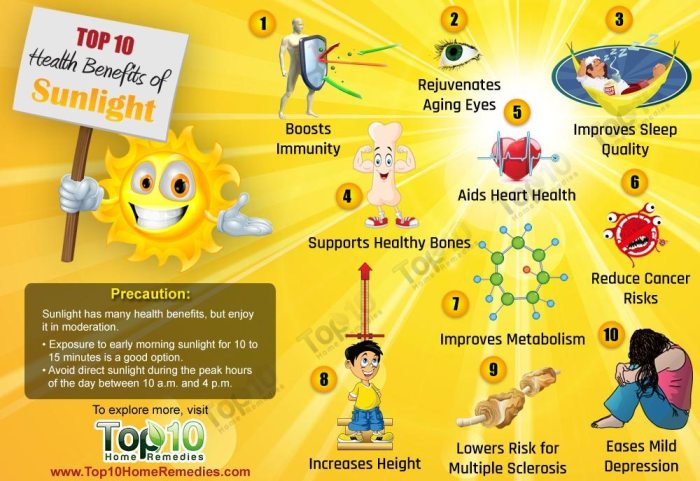
2. Sunlight exposure has been linked to a lower risk of autoimmune diseases, such as multiple sclerosis and rheumatoid arthritis.
3. Adequate vitamin D levels have been associated with a reduced risk of developing certain types of cancer.
Mental Wellness
Sunlight exposure plays a crucial role in influencing mental health positively. The impact of sunlight on mental wellness is closely tied to the production of vitamin D in the body.
Improvement in Mood and Reduction of Depression Symptoms
- Vitamin D, obtained from sunlight exposure, has been linked to the regulation of mood and reduction of symptoms associated with depression.
- Studies have shown that individuals with low levels of vitamin D are more likely to experience symptoms of depression.
- Increased exposure to natural light can lead to an improvement in overall mood and a reduction in feelings of anxiety and depression.
Connection between Sunlight, Vitamin D, and Mental Well-being
- Sunlight exposure triggers the production of vitamin D in the skin, which in turn influences the production of serotonin, a neurotransmitter that affects mood regulation.
- Vitamin D receptors are present in areas of the brain that are involved in the regulation of emotions, highlighting the importance of sunlight in maintaining mental well-being.
- Adequate levels of vitamin D have been associated with a lower risk of developing mental health disorders such as depression and seasonal affective disorder.
Benefits of Natural Light Exposure for Mental Wellness
- Natural light exposure during the day helps to regulate the body’s internal clock, promoting better sleep patterns and overall mental health.
- Spending time outdoors and being exposed to sunlight can increase energy levels and improve cognitive function, contributing to a positive mindset.
- Individuals who incorporate regular sunlight exposure into their daily routine often report feeling more alert, focused, and emotionally balanced.
Physical Fitness
Sunlight exposure plays a crucial role in enhancing physical fitness levels by supporting various aspects of overall health and well-being.
Role of Vitamin D in Supporting Muscle Function and Strength
Vitamin D is essential for optimal muscle function and strength. It aids in the absorption of calcium, which is vital for muscle contractions and overall muscle performance. Adequate levels of vitamin D can help prevent muscle weakness, fatigue, and improve muscle recovery after exercise.
Outdoor Activities in Sunlight for Improved Physical Performance
Engaging in outdoor activities under sunlight exposure can have a significant impact on physical performance. Activities such as running, cycling, hiking, or playing sports outdoors can help boost endurance, stamina, and overall fitness levels. The combination of physical activity and sunlight exposure can enhance mood, energy levels, and motivation to stay active.
Importance of Sunlight for Overall Physical Health and Fitness
Sunlight is essential for overall physical health and fitness as it stimulates the production of vitamin D in the body. Vitamin D plays a crucial role in maintaining bone health, muscle function, and immune system support, all of which are essential for optimal physical fitness. Regular exposure to sunlight can help improve energy levels, mood, and overall well-being, contributing to better physical performance and fitness levels.
Healthy Eating
Sunlight is a crucial source of vitamin D, which plays a significant role in maintaining overall health and immunity. However, it is essential to complement this natural source of vitamin D with a healthy diet to ensure optimal well-being.
Importance of Vitamin D in a Balanced Diet
Benefits of sunlight and vitamin D for immunity – Vitamin D obtained from sunlight exposure is essential for various bodily functions, including boosting immunity, promoting bone health, and reducing inflammation. Inadequate levels of vitamin D can lead to a weakened immune system, increased risk of infections, and various health issues.
Combining sunlight exposure with a diet rich in vitamin D can help prevent deficiencies and promote overall health. Including foods that are naturally rich in vitamin D can further support the body’s immune system and ensure proper functioning.
Foods Rich in Vitamin D
- Fatty fish such as salmon, tuna, and mackerel
- Egg yolks
- Cheese
- Mushrooms
- Fortified foods like dairy products and cereals
By incorporating these vitamin D-rich foods into your daily meals, you can enhance your body’s ability to absorb and utilize vitamin D obtained from sunlight exposure. This synergistic approach can help maintain optimal levels of vitamin D and support overall well-being.
Preventive Care: Benefits Of Sunlight And Vitamin D For Immunity

Preventive healthcare plays a crucial role in maintaining overall well-being by reducing the risk of various diseases. Sunlight exposure and adequate levels of vitamin D are key components of preventive care.
Role of Vitamin D in Disease Prevention
Vitamin D is essential for supporting the immune system, which in turn helps reduce the risk of certain diseases. Adequate vitamin D levels have been associated with a lower incidence of conditions such as respiratory infections, cardiovascular diseases, and autoimmune disorders.
Importance of Sunlight Exposure for Overall Health
Sunlight exposure is a natural source of vitamin D production in the body. Incorporating regular sunlight exposure into your routine can help maintain optimal levels of vitamin D, thus supporting your immune system and overall health. It also plays a role in regulating mood and sleep patterns, contributing to mental wellness.
Proactive Approach to Healthcare
By making sunlight exposure a part of your daily routine, you are taking a proactive approach to healthcare. Spending time outdoors, engaging in physical activities under the sun, and ensuring adequate vitamin D intake through diet or supplements can help in disease prevention and overall well-being.
Balanced Diet
Maintaining a balanced diet is crucial for overall health and well-being. Including vitamin D from sunlight in your diet plays a significant role in ensuring optimal nutrition and immunity support.
Sunlight Exposure and Essential Nutrients, Benefits of sunlight and vitamin D for immunity
Sunlight exposure not only provides vitamin D but also complements other essential nutrients necessary for overall health. It helps in the absorption of calcium, which is crucial for bone health, and supports the immune system to fight off infections.
Benefits of Natural Sources of Vitamin D
Incorporating natural sources of vitamin D into your diet offers numerous benefits. Foods like fatty fish, eggs, and fortified dairy products can provide additional sources of vitamin D, contributing to a well-rounded diet that supports immune function and overall health.
Meal Plans for Balanced Diet with Sunlight Exposure
– Breakfast: Include a serving of fortified cereal with milk and a side of scrambled eggs for a vitamin D-rich start to your day.
– Lunch: Opt for grilled salmon paired with leafy greens and a side of yogurt to boost your vitamin D intake and promote a balanced meal.
– Snacks: Choose almonds or cheese as snacks to incorporate vitamin D into your diet between meals.
– Dinner: Enjoy a serving of baked trout with quinoa and steamed broccoli to round out your day with a nutritious, vitamin D-rich meal.
Regular Exercise
Exposure to sunlight can significantly enhance the benefits of regular exercise by providing the body with essential vitamin D. This natural source of vitamin D plays a crucial role in supporting physical activity and exercise performance, contributing to overall well-being.
Role of Vitamin D in Supporting Physical Activity
Vitamin D is essential for maintaining strong bones and muscles, which are vital for physical activity and exercise. It helps in the absorption of calcium, promoting bone health and reducing the risk of fractures during intense workouts. Additionally, vitamin D is known to improve muscle function, strength, and balance, enhancing overall exercise performance.
Importance of Outdoor Workouts for Overall Well-Being
Outdoor workouts offer numerous benefits beyond just physical fitness. Exercising outdoors exposes individuals to natural sunlight, which boosts mood, reduces stress, and improves mental well-being. The fresh air and change of scenery also provide a refreshing environment for workouts, increasing motivation and energy levels.
Examples of Exercise Routines Incorporating Sunlight Exposure
– Morning runs or walks in the park to start the day with sunlight exposure.
– Outdoor yoga or pilates sessions to combine exercise with relaxation and vitamin D absorption.
– Cycling or hiking in nature trails to enjoy the outdoors while staying active.
– High-intensity interval training (HIIT) in a sunny outdoor space for a challenging workout with vitamin D benefits.
Mental Health
Sunlight exposure and vitamin D play a crucial role in mental health maintenance and well-being. Adequate sunlight exposure has been linked to improved mental health and can help alleviate symptoms of anxiety and stress.
Benefits of Sunlight and Vitamin D for Mental Health
- Increased serotonin levels: Sunlight exposure triggers the release of serotonin, a neurotransmitter that contributes to feelings of happiness and well-being.
- Reduced risk of depression: Studies have shown that individuals with higher levels of vitamin D are less likely to experience symptoms of depression.
- Improved sleep quality: Exposure to natural light helps regulate the body’s internal clock, leading to better sleep patterns and overall mental well-being.
Holistic Wellness
Sunlight and vitamin D play a crucial role in promoting holistic wellness by contributing to the interconnectedness of physical, mental, and emotional well-being. A holistic approach to health involves incorporating sunlight exposure to enhance overall wellness.
Benefits of Sunlight and Vitamin D for Holistic Wellness
- Improved mood and mental health: Sunlight exposure stimulates the production of serotonin, a neurotransmitter that boosts mood and helps reduce symptoms of depression and anxiety.
- Enhanced immune function: Vitamin D, synthesized in the body through sunlight exposure, supports a healthy immune system by regulating immune cell activity.
- Reduced risk of chronic diseases: Adequate levels of vitamin D have been linked to a lower risk of conditions such as heart disease, diabetes, and certain types of cancer.
- Healthy bones and muscles: Vitamin D plays a crucial role in calcium absorption, promoting strong bones and muscles, which are essential for overall physical wellness.
- Better sleep quality: Exposure to natural light helps regulate the body’s internal clock, promoting better sleep patterns and overall restorative sleep.
Chronic Diseases
Sunlight and vitamin D play a crucial role in reducing the risk of chronic diseases. Adequate exposure to sunlight helps the body produce vitamin D, which is essential for maintaining overall health and preventing various chronic conditions.
Impact of Vitamin D Deficiency
Vitamin D deficiency has been linked to the development of several chronic diseases, including osteoporosis, cardiovascular diseases, autoimmune disorders, and certain types of cancer. Insufficient levels of vitamin D in the body can weaken the immune system and increase the susceptibility to these chronic conditions.
Preventive Effects of Sunlight Exposure
Adequate sunlight exposure is essential for maintaining optimal levels of vitamin D, which in turn helps in combating chronic diseases. Research has shown that regular exposure to sunlight can reduce the risk of conditions like heart disease, diabetes, multiple sclerosis, and certain types of cancer.
Examples of Chronic Diseases Influenced by Sunlight and Vitamin D
– Osteoporosis: Vitamin D is crucial for calcium absorption and bone health, reducing the risk of osteoporosis.
– Cardiovascular Diseases: Vitamin D deficiency has been associated with an increased risk of heart disease and hypertension.
– Autoimmune Disorders: Adequate vitamin D levels can help regulate the immune system and reduce the risk of autoimmune conditions like rheumatoid arthritis.
– Cancer: Research suggests that vitamin D may play a role in preventing certain types of cancer, including breast, colon, and prostate cancer.
Immunity Boosters
Immunity boosters are substances or practices that help enhance the body’s immune response, making it more effective in fighting off infections and illnesses. These boosters play a crucial role in maintaining overall health and well-being.
Sunlight Exposure and Vitamin D
Exposure to sunlight and the production of vitamin D in the skin are natural ways to boost immunity. Vitamin D is essential for the proper functioning of the immune system, as it helps regulate immune responses and reduce inflammation. Sunlight exposure is a primary source of vitamin D, making it a key factor in strengthening immunity.
- Sunlight exposure stimulates the production of vitamin D in the skin, which plays a vital role in enhancing immune function.
- Vitamin D helps modulate the immune system by promoting the production of antimicrobial peptides that defend against pathogens.
- Adequate levels of vitamin D have been linked to a reduced risk of infections and autoimmune diseases.
Other Immunity Boosters
In addition to sunlight exposure and vitamin D, there are other immunity boosters that can complement their benefits:
- Probiotics: These beneficial bacteria help maintain a healthy gut microbiome, which is crucial for immune function.
- Antioxidants: Found in fruits and vegetables, antioxidants help protect cells from damage and boost the immune system.
- Exercise: Regular physical activity can improve immune function and reduce the risk of chronic diseases.
- Healthy Diet: Consuming a balanced diet rich in nutrients supports overall immunity and health.
Commonly Asked Questions
How does sunlight exposure boost immunity?
Sunlight exposure triggers the production of vitamin D in the body, which plays a crucial role in supporting immune function.
Can vitamin D from sunlight improve mental health?
Yes, vitamin D obtained from sunlight has been linked to improved mood and can help reduce symptoms of depression.
What are the benefits of natural light exposure for physical fitness?
Natural light exposure can enhance physical fitness levels by supporting muscle function and strength, leading to improved performance in outdoor activities.
How does sunlight contribute to preventive healthcare?
Sunlight and vitamin D play a role in reducing the risk of certain diseases through immune system support, making them essential components of preventive care.
What are some examples of chronic diseases influenced by sunlight exposure and vitamin D levels?
Chronic conditions such as osteoporosis, cardiovascular diseases, and certain types of cancer can be influenced by adequate sunlight exposure and vitamin D levels.