
Physical fitness training for building muscle endurance is essential for achieving a well-rounded fitness regimen. It goes beyond just lifting heavy weights; it involves developing the capacity of your muscles to sustain repeated contractions over an extended period. This type of training is crucial for activities like running, swimming, cycling, and even everyday tasks like carrying groceries or climbing stairs.
It’s not about how much weight you can lift once, but rather how long you can maintain effort. This article will delve into the principles, exercises, and strategies for building muscle endurance and incorporating it into your fitness routine.
Building muscle endurance is about pushing your limits and seeing how long you can sustain a specific activity. This form of training focuses on increasing the time your muscles can work before fatigue sets in. It’s not just about brute strength, but about the ability to maintain a certain level of effort over an extended period.
Whether you’re a seasoned athlete or just starting your fitness journey, understanding the principles of muscle endurance training can help you reach your goals and improve your overall well-being.
Understanding Muscle Endurance
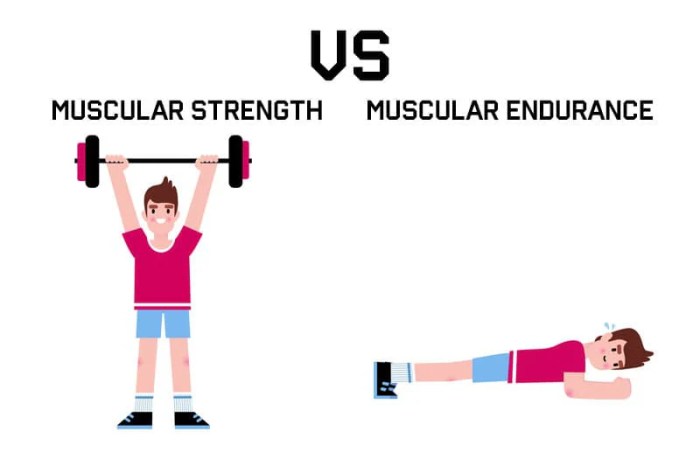
Muscle endurance is the ability of a muscle or group of muscles to perform repeated contractions over an extended period. It’s a crucial component of overall physical fitness, contributing to better health, performance in various activities, and improved quality of life.
Comparing Muscle Endurance with Strength and Power
Muscle endurance differs from other fitness components like strength and power.
- Strengthrefers to the maximum force a muscle can exert in a single contraction. It’s measured by the amount of weight you can lift once.
- Poweris the rate at which work is done, involving both strength and speed. It’s measured by how quickly you can lift a weight.
- Muscle endurancefocuses on the ability to sustain repeated contractions over time. It’s measured by how long you can maintain a certain level of effort, such as holding a plank or running for a prolonged period.
Examples of Activities Requiring High Muscle Endurance
Many activities require high muscle endurance, including:
- Endurance sports:Running, swimming, cycling, and rowing all demand significant muscle endurance to sustain effort over extended distances or durations.
- Team sports:Sports like basketball, soccer, and volleyball involve repeated bursts of activity and require endurance to maintain performance throughout the game.
- Everyday activities:Activities like carrying groceries, climbing stairs, and gardening require muscle endurance to perform them efficiently without fatigue.
Principles of Training for Muscle Endurance
To effectively build muscle endurance, understanding and applying the principles of training is crucial. These principles guide your workout structure, ensuring optimal results and minimizing the risk of injury.
Overload Principle
The overload principle states that to improve muscle endurance, you must consistently challenge your muscles beyond their current capabilities. This can be achieved by increasing the duration, intensity, or frequency of your workouts. For example, gradually increasing the weight you lift, the number of repetitions you perform, or the duration of your cardio sessions will force your muscles to adapt and become stronger.
Progression Principle
Building on the overload principle, the progression principle emphasizes the importance of gradual increases in training load over time. This gradual increase allows your body to adapt and avoid overtraining or injury. For example, if you start by running for 30 minutes three times a week, you can gradually increase your running time or frequency as your endurance improves.
Specificity Principle
The specificity principle states that training should be tailored to the specific activity or muscle group you want to improve. This means that if you want to improve your endurance for running, you should focus on running-specific exercises. Similarly, if you want to improve the endurance of your upper body, you should focus on exercises that target those muscles.
Training Methods
Different training methods can be employed to develop muscle endurance, each with its own advantages and considerations.
Interval Training
Interval training involves alternating periods of high-intensity exercise with periods of rest or low-intensity exercise. This method helps improve both cardiovascular fitness and muscle endurance. A common example is running at a fast pace for 1 minute, followed by 1 minute of jogging or walking, and repeating this cycle for a set duration.
Circuit Training
Circuit training involves performing a series of exercises in a continuous loop, with minimal rest between exercises. This method effectively challenges multiple muscle groups and improves overall endurance. A sample circuit could involve performing push-ups, squats, lunges, and jumping jacks, repeating the cycle for several rounds.
Endurance Training
Endurance training involves performing exercises at a moderate intensity for an extended period. This method is effective for building cardiovascular fitness and increasing muscle endurance over time. Examples include jogging, cycling, swimming, or hiking.
Sample Training Program
Here’s a sample training program incorporating the principles and methods discussed above:
Day 1: Interval Training
Warm-up
5 minutes of light cardio, such as jogging or jumping jacks.
Interval Training
30 minutes of interval running (1 minute high-intensity, 1 minute low-intensity).
Cool-down
5 minutes of light stretching.
Day 2: Circuit Training
Warm-up
5 minutes of dynamic stretching, such as arm circles and leg swings.
Circuit
Perform 3 rounds of the following exercises with minimal rest between each exercise:
Push-ups
10-12 repetitions
Squats
15-20 repetitions
Lunges
10-12 repetitions per leg
Jumping jacks
30 seconds
Cool-down
5 minutes of static stretching, holding each stretch for 30 seconds.
Day 3: Rest or Light Activity
Day 4: Endurance Training
Warm-up
5 minutes of light cardio, such as cycling or swimming.
Endurance Training
45 minutes of continuous jogging or cycling at a moderate intensity.
Cool-down
5 minutes of light stretching.
Day 5: Strength Training
Warm-up
5 minutes of light cardio and dynamic stretching.
Strength Training
Perform 3 sets of 8-12 repetitions for each exercise:
Bench press
Pull-ups
Deadlifts
Barbell rows
Cool-down
5 minutes of static stretching.
Day 6: Rest or Light Activity
Day 7: Active Rest
Choose an activity you enjoy, such as yoga, swimming, or hiking, for 30-60 minutes.
This is just a sample program, and you should adjust it based on your individual fitness level and goals. Remember to listen to your body and take rest days when needed.
Exercise Selection for Muscle Endurance
Choosing the right exercises is crucial for building muscle endurance. It’s important to select exercises that challenge the muscles you want to target, and that can be performed for a sustained period of time.
Types of Exercises for Muscle Endurance
Exercises for muscle endurance can be broadly categorized into two main types:
- Compound Exercises:These exercises engage multiple muscle groups simultaneously, making them highly efficient for building overall endurance. Examples include squats, lunges, push-ups, pull-ups, and rows.
- Isolation Exercises:These exercises target a single muscle group, allowing for more focused endurance training. Examples include bicep curls, tricep extensions, hamstring curls, and calf raises.
Exercise Selection Table
The following table Artikels some common exercises for muscle endurance, categorized by muscle group, exercise type, and equipment required:
| Muscle Group | Exercise Type | Equipment Required |
|---|---|---|
| Legs | Squats | None |
| Legs | Lunges | None |
| Legs | Calf Raises | None |
| Chest | Push-ups | None |
| Back | Pull-ups | Pull-up bar |
| Back | Rows | Dumbbells or barbell |
| Biceps | Bicep Curls | Dumbbells or barbell |
| Triceps | Tricep Extensions | Dumbbells or barbell |
Exercise Technique and Form
Proper form is essential for maximizing the effectiveness of your exercises and minimizing the risk of injury. Here’s a breakdown of the proper form and technique for some common muscle endurance exercises:
Squats
- Stand with your feet shoulder-width apart, toes slightly pointed outwards.
- Lower your body down by bending your knees and hips, as if you are sitting in a chair.
- Keep your back straight and your core engaged.
- Ensure your knees stay behind your toes.
- Push through your heels to return to the starting position.
Lunges
- Stand with your feet hip-width apart.
- Take a large step forward with one leg, bending your knee to a 90-degree angle.
- Keep your back straight and your core engaged.
- Ensure your front knee stays behind your toes.
- Push off with your front foot to return to the starting position.
- Repeat on the other side.
Push-ups
- Start in a plank position, with your hands shoulder-width apart and your body in a straight line.
- Lower your body down by bending your elbows, keeping them close to your body.
- Push back up to the starting position, extending your arms fully.
Pull-ups
- Grip the pull-up bar with an overhand grip, slightly wider than shoulder-width apart.
- Hang from the bar with your arms fully extended.
- Pull yourself up until your chin is above the bar.
- Lower yourself back down to the starting position in a controlled manner.
Rows
- Sit on a bench with your feet flat on the floor.
- Grab a barbell with an overhand grip, slightly wider than shoulder-width apart.
- Keep your back straight and your core engaged.
- Pull the barbell up towards your chest, keeping your elbows close to your body.
- Lower the barbell back down to the starting position in a controlled manner.
Nutrition for Muscle Endurance
Fueling your body with the right nutrients is crucial for supporting muscle endurance training. A balanced diet provides the essential building blocks for muscle repair and growth, allowing you to push your limits and recover effectively.
Macronutrient Intake for Muscle Endurance
Macronutrients, including carbohydrates, protein, and fats, play a vital role in muscle endurance.
- Carbohydrates:Carbohydrates are your body’s primary source of energy, particularly during intense exercise. Aim for a moderate to high intake of complex carbohydrates like whole grains, fruits, and vegetables. These provide sustained energy release, helping you maintain your workout intensity.
- Protein:Protein is essential for muscle repair and growth. Ensure you consume adequate protein to support muscle recovery after endurance training. Aim for 1.2-1.7 grams of protein per kilogram of body weight per day. Good sources include lean meats, poultry, fish, eggs, dairy products, and plant-based protein sources like beans, lentils, and tofu.
- Fats:Healthy fats, like those found in avocados, nuts, and olive oil, are important for hormone production and cell function. Include these in your diet for overall health and well-being.
Key Nutrients for Muscle Endurance
Specific nutrients play a crucial role in supporting muscle endurance.
- Iron:Iron is a component of hemoglobin, which carries oxygen to your muscles. Iron deficiency can lead to fatigue and reduced exercise performance. Good sources of iron include red meat, poultry, fish, beans, lentils, and fortified cereals.
- Vitamin B12:Vitamin B12 is essential for energy production and red blood cell formation. It helps transport oxygen to your muscles, crucial for endurance training. Good sources of vitamin B12 include meat, poultry, fish, eggs, and dairy products.
- Creatine:Creatine is a naturally occurring compound that helps your muscles produce energy. Supplementing with creatine can improve muscle endurance and strength.
Preventive Care
Preventive care is crucial for maintaining optimal health and preventing the development of chronic diseases. Regular health checkups and screenings are essential for early detection and intervention, allowing for more effective treatment and improved outcomes.
Common Health Risks and Preventative Measures
Preventive measures can significantly reduce the risk of developing common health risks. These measures often involve lifestyle modifications, such as adopting a healthy diet, engaging in regular physical activity, and maintaining a healthy weight.
- Cardiovascular Disease:Regular exercise, a balanced diet low in saturated fat and cholesterol, and maintaining a healthy weight can help prevent heart disease.
- Type 2 Diabetes:Maintaining a healthy weight, engaging in regular physical activity, and consuming a balanced diet can significantly reduce the risk of developing type 2 diabetes.
- Cancer:A healthy lifestyle, including a balanced diet rich in fruits and vegetables, regular physical activity, and avoiding smoking and excessive alcohol consumption, can help reduce the risk of certain cancers.
- Osteoporosis:Consuming a diet rich in calcium and vitamin D, engaging in weight-bearing exercises, and avoiding smoking can help prevent osteoporosis.
Importance of Early Detection and Intervention
Early detection and intervention are essential for managing health concerns effectively. Regular health checkups and screenings allow for the identification of potential health problems before they become serious. This early detection allows for timely intervention, leading to more successful treatment outcomes and a better quality of life.
Balanced Diet: Physical Fitness Training For Building Muscle Endurance
A balanced diet is crucial for muscle endurance, as it provides the necessary nutrients for muscle growth, repair, and energy production. It involves consuming all essential nutrients in the right proportions, ensuring optimal body function and supporting your training efforts.
Principles of a Balanced Diet
A balanced diet follows the principles of variety, moderation, and adequacy. This means consuming a wide range of foods from all food groups in appropriate amounts, meeting your individual nutritional needs.
A balanced diet should include:
Carbohydrates
Provide energy for muscle activity.
Proteins
Essential for muscle growth and repair.
Fats
Provide energy and support hormone production.
Vitamins and Minerals
Support overall health and bodily functions.
Water
Essential for hydration and optimal performance.
Balanced Meal Plans
Balanced meal plans should cater to individual dietary needs and preferences, considering factors such as activity level, age, and health conditions.
Examples of Balanced Meal Plans
Here are some examples of balanced meal plans: Vegetarian Meal Plan:
Breakfast
Oatmeal with berries and nuts, soy milk.
Lunch
Lentil soup with whole-grain bread and a side salad.
Dinner
Tofu stir-fry with brown rice and vegetables. Non-Vegetarian Meal Plan:
Breakfast
Scrambled eggs with whole-grain toast and avocado.
Lunch
Grilled chicken salad with mixed greens and quinoa.
Dinner
Salmon with roasted vegetables and sweet potato.
Food Diversity and Variety
Food diversity and variety are essential for ensuring adequate nutrient intake. Consuming a wide range of foods from different food groups provides a wider spectrum of nutrients, promoting optimal health and performance.
For example, instead of eating the same type of fruit every day, try incorporating different fruits with varying nutrient profiles, such as berries, citrus fruits, and apples.
Regular Exercise
Regular exercise is an essential component of a healthy lifestyle, contributing significantly to both physical and mental well-being. Engaging in regular physical activity offers numerous benefits, including improved cardiovascular health, increased muscle mass and strength, enhanced bone density, reduced risk of chronic diseases, and improved mood and cognitive function.
Types of Exercise and Their Benefits, Physical fitness training for building muscle endurance
Regular exercise encompasses a variety of activities that promote physical fitness and overall health. Different types of exercise target specific aspects of fitness, offering unique benefits.
- Cardiovascular Exercise:This type of exercise, also known as aerobic exercise, elevates your heart rate and improves cardiovascular health. Examples include running, swimming, cycling, and dancing. Cardiovascular exercise strengthens the heart and lungs, improves blood circulation, and reduces the risk of heart disease, stroke, and type 2 diabetes.
- Strength Training:Strength training involves exercises that use resistance to build muscle mass and increase strength. Examples include lifting weights, using resistance bands, and doing bodyweight exercises. Strength training improves muscle mass and strength, increases bone density, boosts metabolism, and enhances functional fitness.
- Flexibility Exercises:Flexibility exercises, such as stretching, yoga, and Pilates, improve range of motion and flexibility. These exercises enhance mobility, reduce muscle stiffness, and improve posture.
Recommendations for Incorporating Exercise into a Daily Routine
Incorporating exercise into a daily routine can be challenging, but it is essential for maintaining optimal health. Here are some recommendations:
- Start Gradually:Begin with a moderate amount of exercise and gradually increase the intensity and duration over time. This helps prevent injury and allows your body to adapt to the increased physical demands.
- Find Activities You Enjoy:Choose activities that you find enjoyable and motivating. This will make it more likely that you will stick with your exercise routine.
- Make Exercise a Habit:Schedule time for exercise in your daily routine, just like any other important appointment. Consistency is key to achieving lasting results.
- Set Realistic Goals:Start with achievable goals and gradually increase the intensity and duration of your workouts as you progress. This will help you stay motivated and prevent burnout.
- Listen to Your Body:Pay attention to your body’s signals and rest when needed. Pushing yourself too hard can lead to injury.
Mental Health
Mental health is an essential component of overall well-being, playing a significant role in how we think, feel, and behave. It encompasses our emotional, psychological, and social well-being, influencing our ability to cope with life’s challenges, build healthy relationships, and make sound decisions.
A healthy mind is crucial for a fulfilling and productive life.
The Importance of Mental Health
Mental health is interconnected with physical health. When we experience mental well-being, we are more likely to engage in healthy habits, such as regular exercise, balanced nutrition, and sufficient sleep, which contribute to our physical health. Conversely, poor mental health can negatively impact physical health, increasing the risk of chronic diseases, such as heart disease, diabetes, and depression.
Strategies for Managing Stress, Anxiety, and Depression
Exercise
Regular physical activity is a powerful tool for managing stress, anxiety, and depression. Exercise releases endorphins, which have mood-boosting effects. It can also help to reduce cortisol, a stress hormone, and improve sleep quality. Aim for at least 30 minutes of moderate-intensity exercise most days of the week.
Mindfulness
Mindfulness practices, such as meditation and yoga, can help to reduce stress and improve emotional regulation. Mindfulness involves focusing on the present moment without judgment, helping to calm the mind and reduce racing thoughts. Regular mindfulness practice can cultivate greater self-awareness and emotional resilience.
Seeking Professional Support
If you are struggling with stress, anxiety, or depression, seeking professional support from a therapist or counselor can be incredibly beneficial. A mental health professional can provide personalized guidance, coping strategies, and support in managing your mental health challenges.
Holistic Wellness
Holistic wellness encompasses a comprehensive approach to health and well-being, recognizing that our physical, mental, emotional, and spiritual aspects are interconnected and influence one another. It emphasizes a balanced and integrated approach to living, promoting overall health and vitality.
Interconnectedness of Well-being
Holistic wellness acknowledges that each aspect of our being is intricately linked. Physical health influences mental and emotional well-being, while emotional stability impacts our physical health. Spiritual practices can enhance emotional resilience and foster a sense of purpose, while mental clarity can support physical performance and recovery.
Holistic Wellness Practices
A variety of practices contribute to holistic wellness. These practices aim to promote balance and harmony across all aspects of life.
- Mindfulness and Meditation: Mindfulness techniques, such as meditation, help to cultivate awareness of the present moment, reducing stress and promoting emotional regulation.
- Yoga and Tai Chi: These practices combine physical movement with breathwork and meditation, fostering flexibility, strength, balance, and mental clarity.
- Nature Connection: Spending time in nature has been shown to reduce stress, improve mood, and promote feelings of well-being.
- Social Connections: Strong social relationships provide support, reduce loneliness, and contribute to overall happiness.
- Meaningful Activities: Engaging in activities that align with personal values and goals provides a sense of purpose and fulfillment.
- Healthy Eating: A balanced diet provides the necessary nutrients for optimal physical and mental health.
- Regular Exercise: Physical activity improves cardiovascular health, strengthens muscles, and reduces stress.
- Adequate Sleep: Sufficient sleep is crucial for physical and mental restoration, allowing the body and mind to repair and rejuvenate.
Chronic Diseases
Chronic diseases are long-lasting conditions that generally cannot be cured but can be managed with treatment and lifestyle modifications. They pose a significant burden on individuals, healthcare systems, and economies worldwide.
Prevalence and Impact of Chronic Diseases
Chronic diseases are a major public health concern, accounting for a substantial proportion of global morbidity and mortality. According to the World Health Organization (WHO), non-communicable diseases (NCDs), which are largely chronic, are responsible for 71% of all deaths globally.
These diseases have a profound impact on individuals, families, and societies. They can lead to disability, reduced quality of life, and increased healthcare costs.
Lifestyle Factors and Chronic Disease Prevention
Lifestyle factors play a crucial role in both the development and prevention of chronic diseases. Adopting a healthy lifestyle can significantly reduce the risk of developing these conditions. Key lifestyle factors include:
- Diet:A balanced diet rich in fruits, vegetables, whole grains, and lean protein can help prevent chronic diseases such as heart disease, stroke, type 2 diabetes, and some cancers.
- Exercise:Regular physical activity is essential for maintaining a healthy weight, reducing the risk of heart disease, stroke, type 2 diabetes, and some cancers. Aim for at least 150 minutes of moderate-intensity aerobic activity or 75 minutes of vigorous-intensity aerobic activity per week.
- Stress Management:Chronic stress can contribute to the development of chronic diseases such as heart disease, depression, and anxiety. Effective stress management techniques, such as relaxation exercises, mindfulness, and yoga, can help mitigate the negative effects of stress.
Common Chronic Diseases and Risk Factors
Some of the most common chronic diseases include:
- Heart Disease:This is a leading cause of death worldwide. Risk factors include high blood pressure, high cholesterol, smoking, diabetes, obesity, and family history of heart disease.
- Stroke:This occurs when blood flow to the brain is interrupted. Risk factors include high blood pressure, high cholesterol, smoking, diabetes, obesity, and atrial fibrillation.
- Type 2 Diabetes:This is a condition where the body does not use insulin properly. Risk factors include obesity, family history of diabetes, lack of physical activity, and certain ethnicities.
- Cancer:This is a group of diseases characterized by uncontrolled cell growth. Risk factors vary depending on the type of cancer, but can include smoking, exposure to certain chemicals, genetics, and diet.
- Chronic Obstructive Pulmonary Disease (COPD):This is a lung disease that makes it difficult to breathe. The main cause is smoking, but other risk factors include exposure to air pollution and certain occupational hazards.
- Arthritis:This is a condition that causes pain and inflammation in the joints. There are many types of arthritis, but the most common is osteoarthritis, which is caused by wear and tear on the joints.
Immunity Boosters
A robust immune system is your body’s natural defense mechanism against illness. It protects you from infections, viruses, and diseases, ensuring your overall well-being. A strong immune system is crucial for maintaining health and preventing complications from various health conditions.
Factors Contributing to a Healthy Immune System
A healthy immune system is built upon a combination of factors, including nutrition, lifestyle, and stress management. Here are some key aspects to consider:
Nutrients for Immune Health
A balanced diet rich in essential nutrients is vital for a strong immune system. Here are some key nutrients to prioritize:
- Vitamin C:Found in citrus fruits, berries, and leafy greens, Vitamin C is a potent antioxidant that supports immune cell function and protects against damage from free radicals.
- Vitamin D:This vitamin, produced by the body when exposed to sunlight, plays a role in regulating immune responses and reducing inflammation.
- Zinc:Found in meat, seafood, and nuts, Zinc is crucial for immune cell development and function.
- Selenium:This mineral, found in Brazil nuts, tuna, and eggs, supports the production of antioxidants and helps regulate immune responses.
- Probiotics:Found in fermented foods like yogurt and kimchi, probiotics contribute to a healthy gut microbiome, which is essential for immune function.
Lifestyle Factors
Beyond nutrition, certain lifestyle factors significantly impact immune health:
- Regular Exercise:Moderate physical activity helps boost immune function by improving circulation and reducing inflammation.
- Adequate Sleep:During sleep, the body repairs and regenerates, including immune cells. Aim for 7-9 hours of quality sleep per night.
- Stress Management:Chronic stress weakens the immune system. Engage in stress-reducing activities like yoga, meditation, or spending time in nature.
- Hydration:Staying hydrated is crucial for overall health, including immune function. Drink plenty of water throughout the day.
Boosting Immunity
Here are some practical recommendations for enhancing your immune system:
Dietary Strategies
- Consume a variety of fruits and vegetables:These are rich in antioxidants, vitamins, and minerals that support immune function.
- Include lean protein sources:Protein is essential for immune cell production and repair.
- Limit processed foods and sugary drinks:These can weaken the immune system and contribute to inflammation.
- Consider adding probiotics to your diet:Fermented foods or probiotic supplements can promote a healthy gut microbiome.
Exercise and Stress Management
- Engage in regular physical activity:Aim for at least 30 minutes of moderate-intensity exercise most days of the week.
- Practice stress-reducing techniques:Yoga, meditation, deep breathing exercises, and spending time in nature can help manage stress levels.
- Prioritize sleep:Aim for 7-9 hours of quality sleep per night to allow your body to repair and regenerate.
Last Recap
By understanding the principles of muscle endurance training, incorporating targeted exercises, and fueling your body with the right nutrition, you can effectively build muscle endurance and enhance your overall fitness. Remember, consistency and proper form are key. Don’t hesitate to seek guidance from a qualified fitness professional if needed.
Embrace the journey, push your limits, and enjoy the rewarding experience of building muscle endurance and achieving your fitness aspirations.
Question Bank
What are some examples of exercises that target muscle endurance?
Examples of exercises that target muscle endurance include: bodyweight squats, push-ups, lunges, planks, burpees, and rowing.
How long does it take to build muscle endurance?
The time it takes to build muscle endurance varies depending on factors like your current fitness level, training frequency, and nutrition. Generally, it takes several weeks to months of consistent training to see noticeable improvements.
Is it necessary to lift heavy weights to build muscle endurance?
While lifting heavy weights can help build strength, it’s not essential for building muscle endurance. Bodyweight exercises, resistance bands, and other forms of moderate-intensity training can effectively target muscle endurance.
What are some common mistakes to avoid when training for muscle endurance?
Common mistakes include: overtraining, neglecting proper form, skipping rest days, and not paying attention to nutrition.